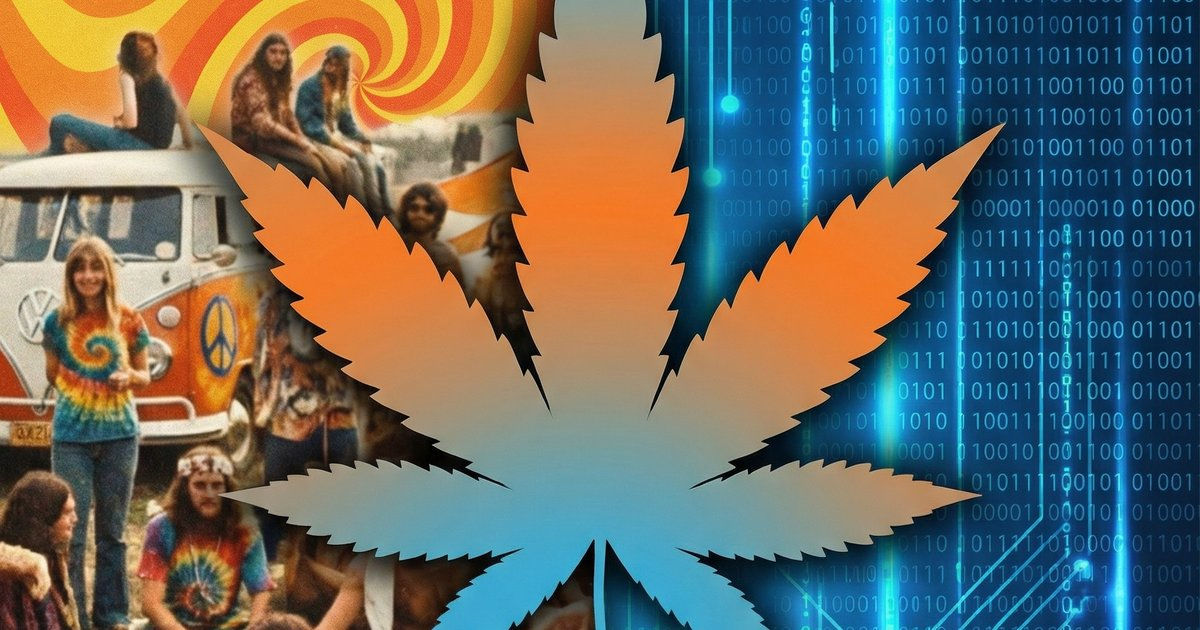
From Code to Counter‑Culture: The Epic Journey of 4/20
- Sascha Kuhlmann

- Apr 20
- 7 min read

Table of Contents
A Very Brief “TL;DR” (for the skimmers)
Setting the Scene: April 20 in 2025
The Waldos’ After‑School Code (San Rafael, 1971)
Grateful Dead Tour Buses & the Spread of “420”
The Oakland Flyer & High Times: When 4:20 Became 4/20
From Civil Disobedience to Mass Celebration (1990s‑2000s)
The Legalization Era: Policy, Economics & Public Health
Commerce vs. Counter‑Culture: Who Owns 4/20?
Global Smoke Signals: How 4/20 Plays on Six Continents
The Social‑Justice Imperative: Equity, Expungement & Reparations
Critiques & Concerns: Over‑Commercialization, Health, Climate
Beyond the Haze: What 4/20 Means for the Next Decade
1 | A Very Brief “TL;DR”
Why do we celebrate marijuana on 4/20?
Because five high‑school friends in Marin County agreed to meet at 4:20 p.m. to hunt a secret pot patch in 1971; their private code leaked into Grateful Dead lore, jumped into High Times magazine via a xeroxed flyer in 1991, and metastasized into a global holiday that now blends protest, policy, profit and pleasure. That one‑sentence version is true—but it leaves out fifty‑plus years of politics, policing, music, medicine and meme‑making.
2 | Setting the Scene: April 20 in 2025
At 4:20 p.m. local time on April 20 this year:
Denver’s Civic Center Park will host roughly 50,000 ticket‑holding revelers at the Mile‑High 420 Festival—no longer free, with GA starting at $20 and VIP lounges running $149 + fees.
London’s Hyde Park will fill with an anticipated 10,000+ smoke‑insisting protesters, despite Royal Parks’ annual plea and a robust Metropolitan Police presence.
Vancouver’s Sunset Beach prepares for an “informal” gathering after the city forced the traditional “Protestival” off its official events calendar, but local media still expects thousands.
Headset analysts project another $85 million‑plus single‑day retail spike across legal markets in North America, easily eclipsing even Black Friday for the cannabis industry.
Twenty‑four U.S. states allow adult‑use sales; another fifteen sanction medical‑only programs, leaving just four with outright bans.
In short: what began as an after‑school scavenger hunt now drives legislation, tourism, commerce and, critically, a battle for restorative justice.
3 | The Waldos’ After‑School Code (San Rafael, 1971)
The mythic origin of 4/20 reads like a Cheech‑and‑Chong‑inspired Goonies episode. In the fall of 1971, Steve Capper, Dave Reddix, Larry Schwartz, Jeffrey Noel and Mark Gravich—self‑dubbed “The Waldos”—received a hand‑drawn map to a Coast Guard serviceman’s abandoned cannabis crop near Point Reyes, California. Practice days for football and track at San Rafael High School ended around 3:30, so they set their clandestine “safaris” for 4:20 p.m. at the Louis Pasteur statue in front of campus. The rallying cry “4:20 Louis!” quickly shortened to simply “420.”
Crucially, 420 served two functions:
Temporal: It meant “meet us at 4:20.”
Coded: It allowed teens to discuss weed within earshot of parents and teachers.
The treasure hunts fizzled, yet the numeric code endured. Letters, postmarked envelopes and a 1971 San Rafael Red & White school newspaper clipping—now archived by the Waldos—confirm the timeline.
What the Waldos couldn’t foresee was that their private joke would outgrow Marin County, let alone become a $40‑billion global industry’s chief holiday.
4 | Grateful Dead Tour Buses & the Spread of “420” – 400 words

The first amplifier for “420” was the Grateful Dead. One Waldo’s older brother managed property for bassist Phil Lesh, granting the kids backstage access. As Deadheads chased the band across the country, “420” migrated from West‑Coast parking lots to East‑Coast set lists. By 1979, the numeric wink decorated drum‑circle banners and VW microbuses from Englishtown, NJ, to Red Rocks, CO.
Unlike other slang that dies with a graduating class, the Dead’s nomadic fanbase functioned as a pre‑digital social network, turning “420” into a cultural export years before the Internet.
5 | The Oakland Flyer &
High Times - When 4:20 Became 4/20
The crucial pivot from time (4:20 p.m.) to date (April 20) occurred on December 28, 1990 at Oakland–Alameda County Coliseum. A photocopied flyer circulated among Deadheads:
“We are going to meet at 4:20 on 4/20 for 420‑ing in Marin County at the old Bolinas Ridge. Lean on your horn at 4:20!”
High Times reporter Steve Bloom pocketed that sheet, and in May 1991 the magazine published both the flyer and a short explainer, effectively baptizing April 20 as the day of worldwide weed worship.
High Times subsequently branded Cannabis Cup events, T‑shirts and editorial calendars around the number, ensuring that even non‑Deadheads recognized 4/20 as “International Pot Day.”
6 | From Civil Disobedience to Mass Celebration (1990s‑2000s)
San Francisco & the Bay Area
By 1997, activists like Debby Goldsberry transformed 4/20 into a multi‑floor party at Maritime Hall—lines curled around city blocks, foggy with both smoke and activism.
Vancouver
What began in 1995 as a modest “Smoke‑In” outside the Vancouver Art Gallery escalated to the Sunset Beach “Protestival,” topping 150,000 attendees by the mid‑2010s before city crack‑downs shifted the event to an “unsanctioned” status.
Denver
Colorado’s 2012 legalization invited out‑of‑state pilgrims. By 2018, Denver’s gathering rivaled Coachella in size, prompting the city to turn the once‑free Civic Center rally into a fenced, ticketed festival in 2024.
Simultaneously, college quads from Boulder to Ann Arbor hosted “Big Smoke” countdowns at 4:20 p.m., while online forums like Overgrow and later Reddit ballooned the meme internationally.
7 | The Legalization Era: Policy, Economics & Public Health
Fast‑forward to 2025:
24 U.S. states plus D.C. allow adult‑use sales; 39 recognize some form of medical cannabis.
The DEA has issued a Notice of Proposed Rulemaking to move cannabis from Schedule I to Schedule III, a watershed that would open doors to federal research tax deductions.
Global GDP impact of legal cannabis is projected at $90 billion by 2027, according to New Frontier Data.
Public‑health researchers note both therapeutic potential (chronic‑pain mitigation, epilepsy, PTSD) and emerging concerns (cannabis use disorder, adolescent cognition).
Why does 4/20 matter in this context?
Legislative Deadlines – Lawmakers often time press releases or bill filings around April 20 to harness media attention.
Retail Windfalls – Headset recorded $83.6 million in combined U.S.‑Canada sales on 4/20/2024, dwarfing the average Friday by 160 %.
Stock‑Market Activity – Cannabis ETFs like MSOS historically spike ~3 % in the trading week surrounding April 20.
8 | Commerce vs. Counter‑Culture: Who Owns 4/20?
Critics argue that 4/20 has devolved into “Green Black Friday.” Dispensaries roll out 42 % off bundles, and licensing deals slap the number on ice‑cream pints and dog treats. Meanwhile, legacy cultivators—some still barred from legal markets due to prior convictions—watch multi‑state operators and venture‑backed brands reap profits.
Denver’s $20 gate fee symbolizes this tension: city officials cite public‑safety costs; activists label it pay‑to‑protest. Even High Times grapples with balance, devoting April issues to both social‑equity profiles and ad‑packed product spreads.
The upshot: 4/20 is no longer purely subversive nor purely commercial—it is a contested commons.
9 | Global Smoke Signals: How 4/20 Plays on Six Continents
Region | Signature Gathering | Legal Climate (2025) | Distinctive Flavor |
Europe | Hyde Park, London—est. 1968, ∼10 k attendees | Mostly medical or decrim; Germany partial‑recreational | Protest over party; heavy police presence |
North America | Mile‑High 420, Denver—ticketed, 50 k + | 24 U.S. rec states; Canada fully legal | Corporate booths, headliner concerts |
South America | La Marcha Mundial da Marihuana, Buenos Aires | Limited medical; growing decrim | Ties 4/20 to anti‑narco‑war activism |
Asia | Bangkok Highland Day, post‑2022 decrim | Thailand quasi‑legal, rest mostly prohibitive | Combines night‑market vibes with medical tourism |
Oceania | Nimbin MardiGrass, Australia | Recreational illegal; medical allowed | Drum circles, hemp fashion shows |
Africa | Cape Town 4/20 Rally | South Africa pending adult‑use bill; others illegal | Intersection with anti‑colonial land‑race preservation |
The universality of 4/20 demonstrates cannabis’ border‑hopping symbolism. Yet each country’s political context refracts the date differently—celebration in Denver feels more like SXSW‑meets‑farmer’s‑market, while Hyde Park remains a civil‑disobedience flash‑mob.
10 | The Social‑Justice Imperative: Equity, Expungement & Reparations
Even as legalization spreads, 40,000+ people in the U.S. remain incarcerated on cannabis charges. Activist groups like Last Prisoner Project leverage 4/20 for fundraising and letter‑writing drives. New York’s adult‑use law reserves early retail licenses for “justice‑involved” applicants, but capital requirements still shut out many. Critics warn that without aggressive expungement, 4/20 risks becoming a victory parade that ignores casualties of the drug war.
On the bright side, Illinois allocates 25 % of cannabis tax revenue to the Restore, Reinvest, Renew (R3) program, funneling $80 million into communities harmed by prohibition—proof that policy can tether profit to restitution when lawmakers prioritize it.
11 | Critiques & Concerns: Over‑Commercialization, Health, Climate
Health: Edible potency has skyrocketed; ER visits for accidental over‑intoxication jump around April 20.
Environment: Indoor grows gobble electricity; a single gram’s carbon footprint rivals three pints of beer. Outdoor cultivation presents water‑rights conflicts in drought‑stricken regions.
Cultural Appropriation: Indigenous use of Cannabis sativa for fiber predates hippie culture by millennia; modern branding often erases that lineage.
Corporate Monopolization: Four MSOs now control ~25 % of U.S. retail shelves; critics liken their dominance to Big Tobacco 2.0.
These critiques don’t cancel 4/20; they complicate it, challenging celebrants to pair jubilation with responsibility.
12 | Beyond the Haze: What 4/20 Means for the Next Decade

If the DEA finalizes Schedule III in 2025‑26, cannabis research will accelerate, insurance coverage could follow, and the IRS’s punishing 280E tax rule would vanish. April 20 may then evolve from a legalization rally into an accountability checkpoint: have states implemented automatic expungement? Is interstate commerce solving over‑supply gluts? Are small farmers surviving?
Internationally, Germany’s phased legal rollout (cultivation clubs now, retail later) will test EU regulations, while Mexico’s Supreme Court continues pressuring lawmakers to legalize nationwide—a move that could reposition North America as the world’s largest contiguous legal market by 2027.
In short, 4/20 is poised to remain the movement’s New Year’s Day—a moment to audit progress, reset goals and, yes, still pass the joint.
Final Take‑Away
We celebrate marijuana on 4/20 because a secret teenage code escaped its time, hitched a ride on a legendary rock band, and offered a unifying shorthand for both joy and justice. Half a century later, the date sits at the crossroads of capitalism and counter‑culture, medicine and merriment, liberation and lingering inequity. However you mark the moment—blazing, baking or simply breathing—remember that 4/20’s true power lies not in THC content but in collective intention: to build a world where no one is caged for a plant, and everyone can access its potential safely, sustainably and equitably.
Happy 4/20—celebrate, advocate and exhale responsibly. 🌿


Comments