

From One Brain to Twenty-Nine: How 5-MeO-DMT Research Evolved from Pioneers to Peer Review
- Sascha Kuhlmann

- Feb 3
- 4 min read
Updated: Mar 9
Last August, researchers at University College London published something remarkable in Cell Reports: the first peer-reviewed study showing exactly what happens in the human brain during a 5-MeO-DMT experience.
Twenty-nine participants. High-density EEG. Rigorous methodology. The world's most powerful psychedelic, finally getting the institutional science it deserved.
But this didn't come out of nowhere.
For a decade before Cell Reports would touch this compound, independent researchers were already mapping this territory — in ceremonial settings, with imperfect tools, taking risks that institutions wouldn't. Their work laid the groundwork for everything that followed.
This is that story.
2015: The Terra Incognita Project
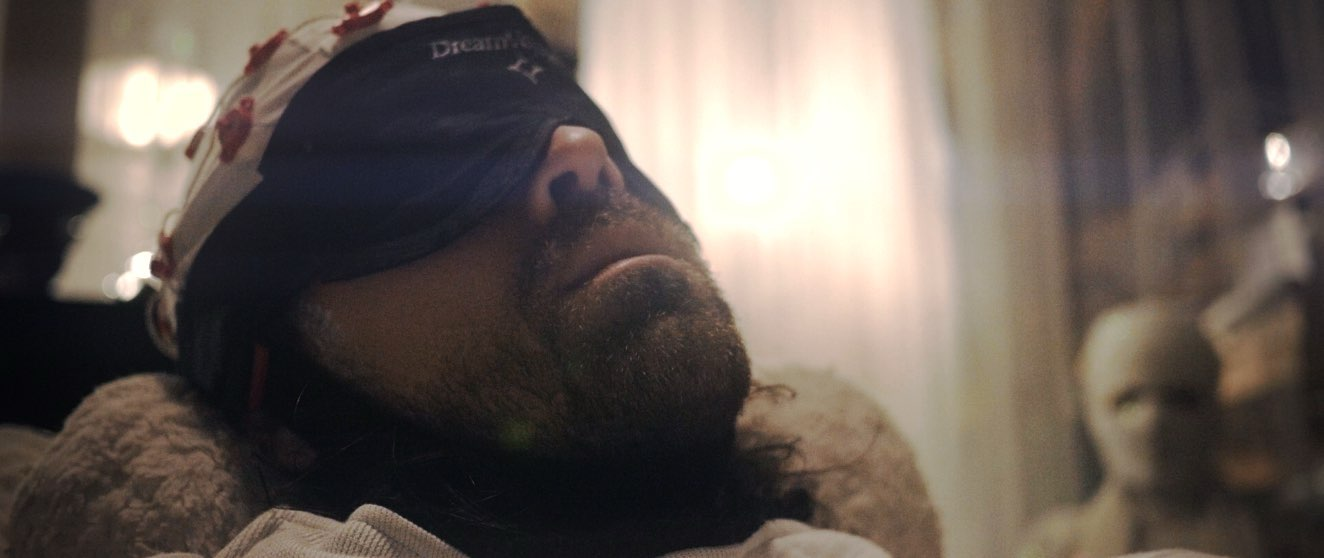
Neuroscientist Juan Acosta-Urquidi and experiential journalist Rak Razam started asking questions before most researchers would touch the subject.
Through the Terra Incognita Project, they gathered QEEG data during 5-MeO-DMT and N,N-DMT ceremonies in Mexico. Their study included 23 subjects (15 men, 8 women) monitored with 19-channel EEG. They published their findings in Cosmos and History in 2015.
The results were striking:
72% average suppression of alpha waves — the most consistent effect across subjects
Significant hypercoherence across all frequency bands, especially beta
Gamma power (35-40 Hz) increases in some subjects
Alpha rebound post-DMT — correlated with subjects reporting "being in peace, a calmed state of wellbeing"
Acosta-Urquidi's work was neurophenomenological — correlating EEG brainstates with subjective "trip reports." The time course and intensity of the experience matched the magnitude of the observed EEG effects.
What Razam noticed went beyond the data. He saw that EEG scans of meditating Buddhist monks looked remarkably similar to people under the influence of 5-MeO-DMT. Both showed the same quieting of ego-processing regions.
"5-MeO-DMT doesn't create something foreign. It lowers the gate to states the brain can access through other means."
The compound is endogenous — we produce it in our own bodies. The external medicine, in Razam's framing, works like "training wheels" for accessing states that meditation or breathwork can also reach.
2019: Martin Ball goes under the EEG
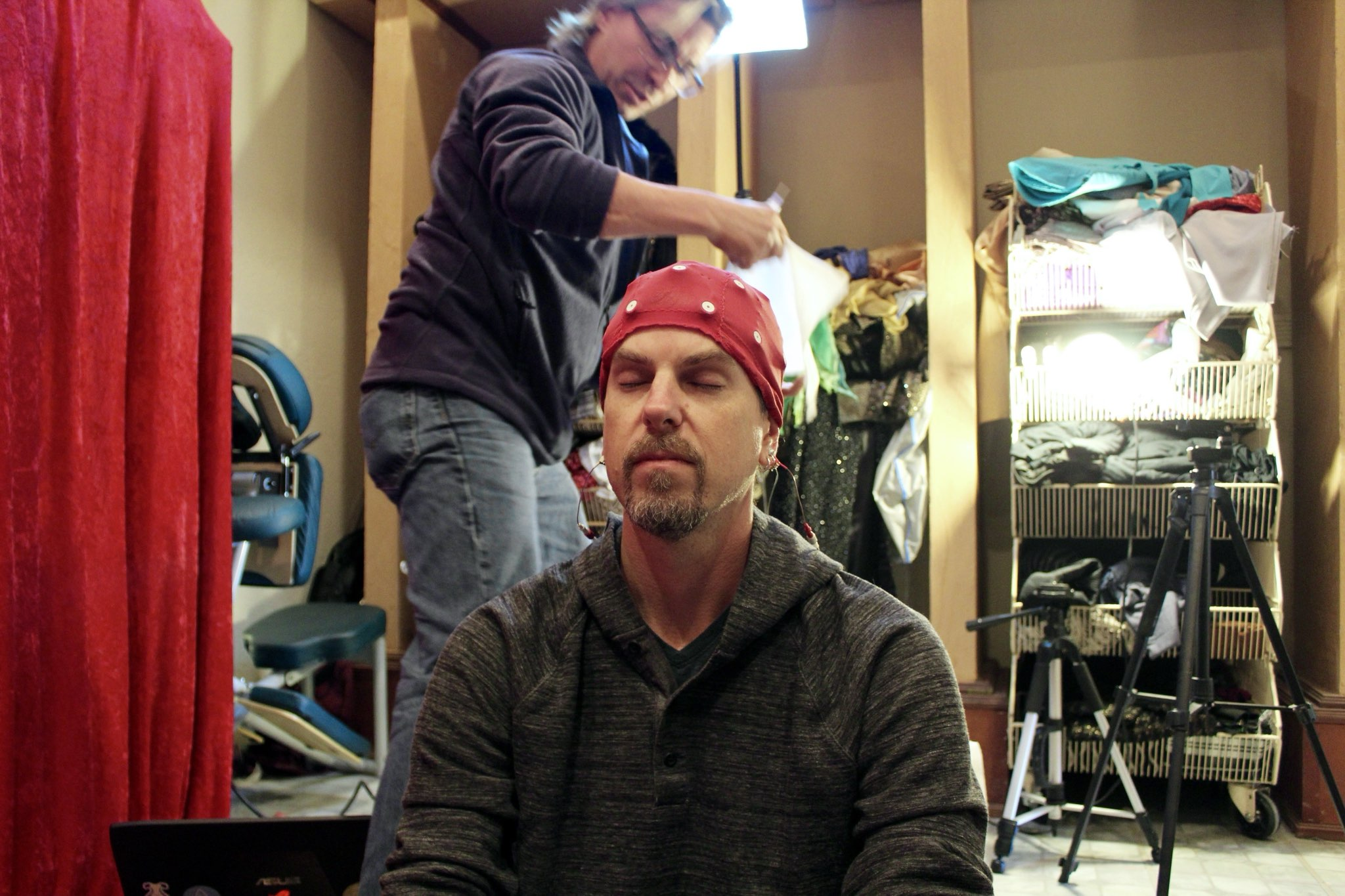
Psychedelic researcher Martin Ball took a different approach: he became the subject.
Working with neuroscientist Jeff Tarrant, Ball strapped on a 19-channel EEG cap, inhaled 5-MeO-DMT, and let Tarrant record whatever happened next. One subject. Real-time monitoring. No hiding behind statistics.
What Tarrant captured was striking: a massive surge in gamma brainwave activity — the frequency associated with high-level information integration and flow states.
The progression told the story:
Gamma activity started asymmetrical, concentrated in the right hemisphere
Then it shifted forward during emotional release
Finally, it became "beautifully balanced and symmetrical" across both hemispheres
The key insight: the brain wasn't shutting down. It was actively working through layers of consciousness, emotion, and integration in real-time.
The Default Mode Network — the neural home of the ego — went quiet. But something else was clearly happening.
2025: UCL publishes in Cell Reports
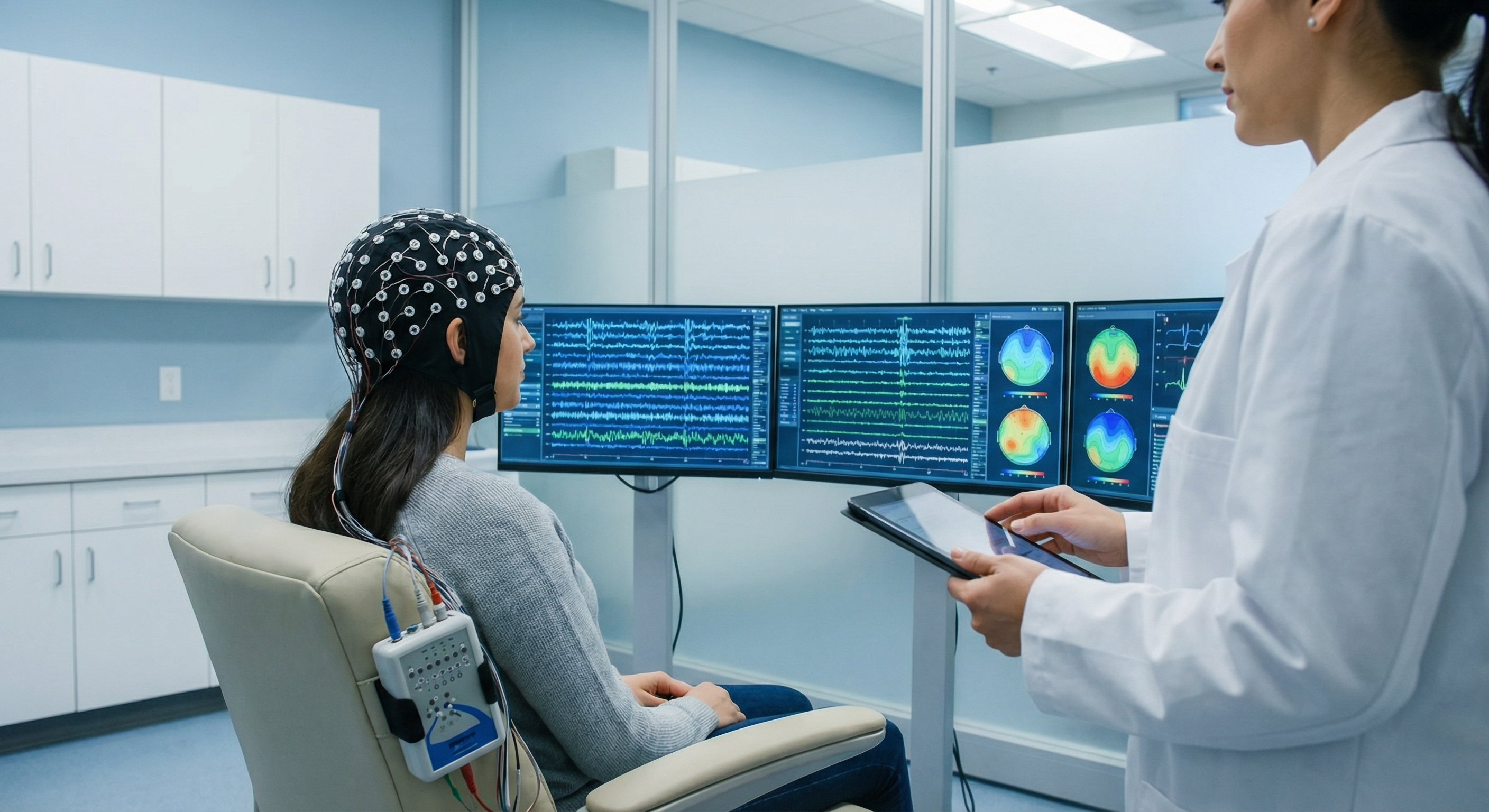
Then came the study that changed everything.
The UCL research published in Cell Reports, led by George Blackburne with co-authors R.G. McAlpine and M. Fabus, brought institutional rigor to the question. Twenty-nine participants. High-density EEG. Analysis of how brain waves move across the cortex over time.
Their focus was different. Where Ball tracked the gamma surge (what's active), UCL examined the slow waves — delta and theta frequencies typically associated with deep sleep or unconsciousness.
Under 5-MeO-DMT, slow waves surged dramatically but became chaotic. Normally, these waves travel predictably front-to-back across the cortex. During the experience, they fragmented — moving in "unusual directions."
The researchers described these waves as "incoherent, heterogeneous, viscous, fleeting, nonrecurring."
The brain settled into what they termed an "unusually simple and stable state." This simplicity prevents the brain from forming the complex categories that normally structure experience: self, time, space, inside versus outside.
Hence the "void."
Three pieces of the same puzzle
These studies don't contradict each other. They're looking at different aspects of the same phenomenon:
Acosta-Urquidi and Razam established the baseline — alpha suppression, hypercoherence, and the connection between EEG patterns and subjective experience. They showed the brain reorganizes in measurable ways.
Ball and Tarrant captured the progression — the gamma surge, the shift from asymmetry to balance, the brain actively working through integration in real-time.
UCL revealed the mechanism — the slow-wave chaos, the collapse of hierarchical processing, the substrate that creates the void.
Together: 5-MeO-DMT disrupts the brain's self-constructing machinery while activating integration processes. The ego goes offline. Something else comes online. And it all happens in a brain that's demonstrably awake.
Why the pioneers matter
It's easy to dismiss early research as preliminary. Acosta-Urquidi and Razam worked in ceremonial contexts. Ball was a single subject. Neither would pass peer review at Cell Reports.
But they asked the questions first. They took the risks first.
When the institutional science caught up, it confirmed what they'd been saying — while adding details they couldn't have captured with their methods.
That's how knowledge advances. Someone goes first with imperfect tools. Others follow with better ones. The picture gets clearer.
Integration is where it becomes real
Understanding the neuroscience is one thing. Knowing what to do with the experience is another.
The research shows these experiences engage specific neural processes. They're not random. And that means the work afterward — integration — has a foundation.
I work with men navigating this territory. If you're looking for support before, during, or after, let's talk.
Sources:
Acosta-Urquidi, J. "QEEG Studies of the Acute Effects of the Visionary Tryptamine DMT," Cosmos and History vol. 11 no. 2 (2015)
Tarrant & Ball, EEG analysis of 5-MeO-DMT experience (2019)
Blackburne G, McAlpine RG, Fabus M, et al. "Complex slow waves in the human brain under 5-MeO-DMT," Cell Reports 44 (August 2025)


Comments