

The AI That Says "Please": Why We're Teaching Machines Manners While Men Still Can't Say "I Need Help"

Updated: Mar 9
Burger King just announced an AI chatbot called "Patty" that lives inside employee headsets. Powered by OpenAI, it listens to drive-thru conversations and tracks whether workers say "welcome," "please," and "thank you." Managers get friendliness scores. The company calls it a "coaching tool."
Let that sit for a second.
We now have artificial intelligence monitoring whether a teenager making $12 an hour remembers to say "thank you" to a stranger ordering a Whopper. Meanwhile, grown men — successful, competent, holding it together by every external measure — can't say three words to the people closest to them:
I need help.
The Friendliness Score We Actually Need
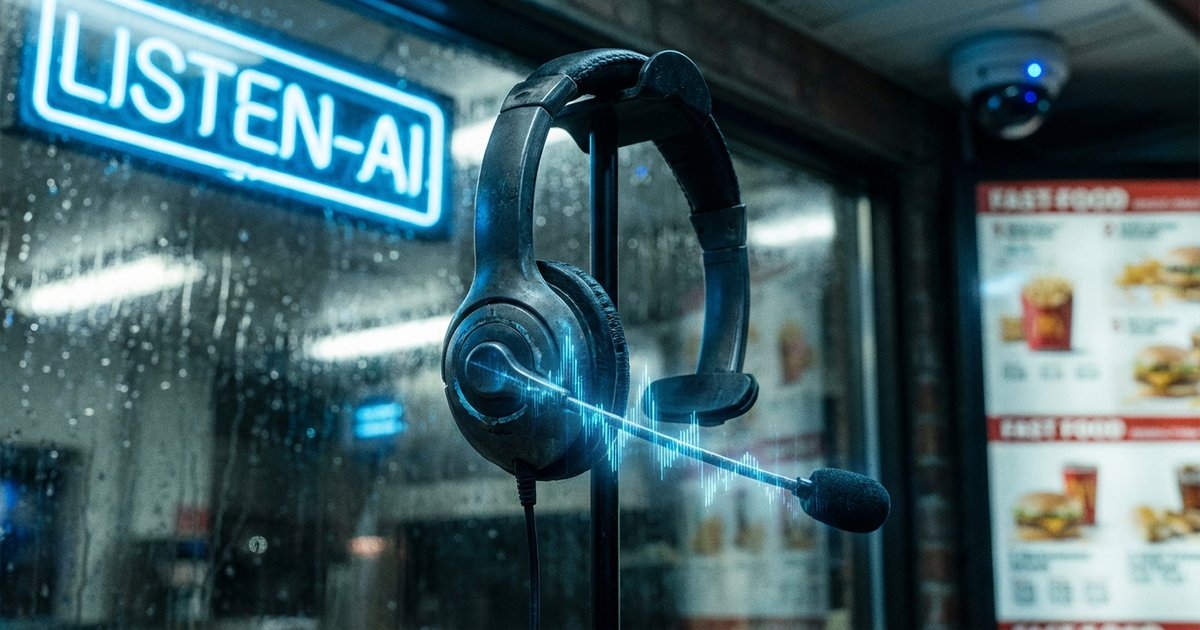
Burger King's logic isn't complicated. They identified the words that correlate with good customer experience — "welcome," "please," "thank you" — and built a system to track them. It's pattern recognition applied to politeness.
We could do the same thing with men's emotional lives, and the data would be brutal.
How often do you say "I'm struggling" out loud? When's the last time you told someone — not your therapist, not a stranger on Reddit, but someone who actually knows you — that you're not okay? If someone built an AI to track those phrases in your daily conversations, what would your score be?
For most men, it would be zero.
Not because we don't feel those things. Because we've been trained — by culture, by fathers, by each other — that vulnerability is a liability. That asking for help is weakness. That the correct response to pain is silence, or a joke, or another drink, or just working harder.
The Real Surveillance Problem
The backlash against Burger King's AI was immediate. People called it "gross" and "peak late-stage corporate behavior." And they're not wrong — there's something deeply uncomfortable about a machine monitoring your tone of voice while you work.
But most men are already under surveillance. It's just internal.
There's a voice in your head that monitors every conversation for signs of weakness. That edits what you're about to say before it comes out. That replaces "I'm scared" with "I'm fine" so automatically you don't even notice the swap anymore.
Patty the AI tracks whether you say "please." Your internal surveillance system tracks whether you ever let your guard down — and punishes you when you do.
At least Burger King's version is trying to encourage more warmth. Yours is doing the opposite.
What Psychedelic Experiences Expose

I work with men in psychedelic integration — helping them make sense of what happens when powerful experiences crack open something they've kept sealed for years. And one of the most common things I hear afterward is some version of:
"I didn't realize how much I was holding."
Not because they're weak. Because they're strong — strong enough to carry it for years without anyone noticing. That takes real effort. But it also takes a toll that compounds silently, the way credit card debt does. You don't feel the interest until the bill comes due.
A psychedelic experience, especially something as powerful as 5-MeO-DMT, doesn't teach you new words. It strips away the ones you've been hiding behind. The corporate script drops. The performance of being fine stops. And what's underneath — the grief, the loneliness, the wanting to be seen — finally gets airtime.
The challenge is what comes next. Because the experience ends, and you go back to a life that still expects the performance. The same relationships. The same patterns. The same internal surveillance.
That's where integration matters. Not as some abstract spiritual concept, but as the practical work of learning to say what's actually true — out loud, to real people, consistently.
Manners vs. Meaning
Burger King is optimizing for the appearance of warmth. Specific words, tracked at scale, reported to management. It's not connection — it's compliance. The system doesn't care if the employee actually means it. It cares if the customer hears it.
We do the same thing in our personal lives. We optimize for appearance. "How are you?" "Good, you?" It's a script. A friendliness score of 100 with a meaning score of zero.
Real connection requires the opposite: fewer polished words, more honest ones. Less "I'm good" and more "Actually, I've been having a rough time." Less performance and more presence.
That's not easy. It's a skill, and like any skill, it takes practice and support. But it starts with a recognition: the script isn't working.
The Coaching We Actually Need

Burger King says Patty is a "coaching and operational support tool." Fair enough. But what would real coaching look like for men who've spent decades optimizing for the wrong metrics?
It looks like a space where the surveillance stops. Where you don't get scored. Where saying "I don't know" or "I'm scared" or "I need help" isn't a failure — it's the first honest thing you've said in months.
That's what integration work is. That's what men's circles are. That's what happens when you stop performing and start showing up.
No algorithm required.
Ready to Drop the Script?
Integration coaching isn't about fixing you — it's about finally being honest. Book a free consultation
Subscribe to get new articles delivered to your inbox.


Comments